


Digital Transformation vs. Frontier Transformation: What’s the Real Difference?

- What Digital Transformation Actually Did
- Digital Transformation vs Frontier Transformation
- What Frontier Transformation Adds to the Picture
- What Is a Frontier Firm?
- How AI Changes the Digital Transformation Conversation
- Why This Distinction Matters for Your Business
- Bringing the Two Together: A Practical Path Forward
- Conclusion
For more than a decade, “digital transformation” has dominated boardroom conversations.
Most organizations have already completed some version of it. They’ve moved workloads to the cloud, implemented CRM and ERP systems, replaced paper-based processes, and invested in business applications.
Yet many business leaders still feel like they’re not getting the efficiency, agility, or innovation they expected.
Why?
Because digital transformation was the foundation, not the destination.
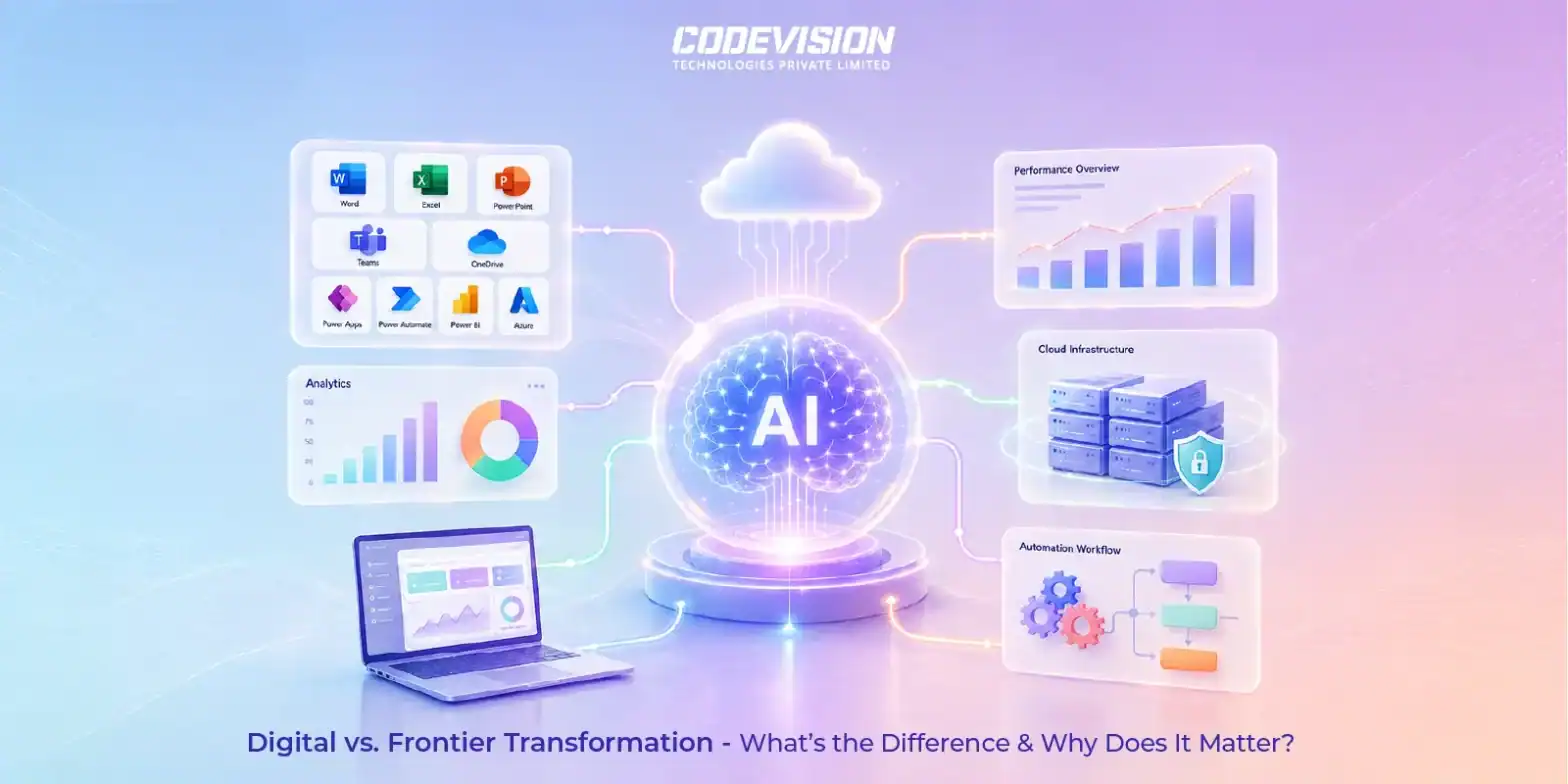
What comes next is what Microsoft refers to as Frontier Transformation: a shift from simply digitizing work to fundamentally redesigning how work gets done through AI, automation, intelligent agents, and connected business systems.
If you’re already investing in Microsoft technologies such as Dynamics 365, Microsoft 365, Power Platform, Copilot, or Azure AI, understanding this evolution is critical to planning your next stage of growth.
What Digital Transformation Actually Did
Digital transformation fundamentally changed how businesses operate.
Over the last decade, organizations have:
- Replaced manual processes with digital workflows
- Moved infrastructure to cloud platforms
- Implemented CRM and ERP solutions
- Improved reporting using dashboards and analytics
- Created centralized business data repositories
For most organizations, these investments delivered significant value. Processes became easier to track, information became more accessible, and collaboration improved.
However, much of digital transformation focused on digitizing existing processes rather than fundamentally changing how work was done. Businesses often took familiar workflows and moved them into software. The technology changed, but the underlying operating model often did not.
A purchase approval process that once required five approvals on paper might still require the same five approvals in a workflow application. A report previously compiled in Excel simply became a dashboard.
The work became digital, but it didn’t necessarily become intelligent.
Digital Transformation vs Frontier Transformation
| Digital Transformation | Frontier Transformation |
|---|---|
| Digitizes existing processes | Reimagines how work gets done |
| Focuses on efficiency | Focuses on intelligence and outcomes |
| Provides dashboards and reports | Enables AI-powered decision-making |
| Connects systems | Creates intelligence across every workflow |
| Automates tasks | Enables AI Agents and Agentic Workflows |
| Improves productivity | Accelerates innovation at scale |
| Creates digital businesses | Creates Human-Led, AI-Powered Enterprises |
| Delivers visibility | Delivers recommendations, actions, and insights |
| Uses CRM and ERP systems | Creates connected intelligence across CRM, ERP, data, and AI |
In short:
Digital transformation asks:
“How do we make this process digital?”
Frontier Transformation asks:
“Should this process work the same way at all?”
What Frontier Transformation Adds to the Picture
Microsoft positions Frontier Transformation as a shift beyond traditional digital transformation, where organizations embed AI and intelligence across workflows, decisions, and customer experiences.
A Frontier organization combines:
- Human expertise
- Enterprise data
- AI-powered workflows
- Microsoft Copilot
- AI agents
- Intelligent automation
- Connected business systems
The result is a business where intelligence exists across every workflow rather than being stored in isolated systems.
Organizations can learn more about Microsoft’s vision directly from Microsoft’s Frontier Transformation initiative
What Is a Frontier Firm?
Microsoft refers to organizations successfully embracing this model as Frontier Firms. It don’t simply adopt AI tools. They integrate AI, data, people, and business systems so intelligence becomes part of everyday operations.
Characteristics of Frontier Firms include:
- Human-AI Collaboration
- AI-powered business processes
- Connected CRM and ERP systems
- Connected Enterprise Intelligence
- Real-time decision support
- Continuous innovation
- AI in the flow of work
Rather than reacting to events after they happen, Frontier Firms use AI, automation, and integrated systems to proactively improve customer experiences, employee productivity, and operational performance.
How AI Changes the Digital Transformation Conversation
This is where the conversation shifts dramatically. Digital transformation made information digital. Frontier Transformation makes information actionable.
Organizations can now use:
- Microsoft Copilot
- AI Agents
- Copilot Studio
- Power Platform
- Azure AI
to reduce repetitive work, automate decisions, and improve business outcomes.
Examples include:
From Dashboards to Decisions
Digital transformation delivered reports.
Frontier Transformation delivers recommendations.
An AI Agent can analyze operational data, identify risks, and suggest next actions before a manager even opens a dashboard.
From Automation to Agentic Workflows
Automation follows predefined instructions.
Agentic workflows combine AI capabilities, business context, automation, and human oversight to handle tasks and decisions more dynamically.
From Disconnected Systems to Connected Intelligence
Many organizations still operate with CRM, ERP, analytics, and collaboration tools that don’t communicate effectively.
Frontier Transformation focuses on creating connected business systems where information flows seamlessly across the organization rather than being trapped inside individual applications.
When sales data from Dynamics 365, operational insights from ERP systems, business intelligence from Power BI, and automation through Power Platform work together, organizations gain a unified view of their operations and can respond faster to change.
This is where Microsoft’s ecosystem becomes particularly powerful. Solutions such as Power Apps, Power Automate, Power BI, Dynamics 365, and Copilot Studio enable businesses to connect data, automate workflows, and bring AI into everyday work.
Rather than operating as separate systems, these technologies create a connected intelligence platform that helps employees access information faster, improve decision-making, and deliver better customer experiences.
Why This Distinction Matters for Your Business
This isn’t just a change in terminology.
It changes how organizations should think about technology investments over the next few years.
If your business is still wrestling with manual processes, paper-based workflows, or disconnected systems, digital transformation should remain your primary focus.
But if you’ve already implemented the basics and are still experiencing:
- Data silos
- Slow reporting
- Email-heavy approvals
- Manual reconciliation between systems
- Spreadsheet dependency
- Repetitive decision-making
then the challenge is probably not a lack of technology.
The challenge is that the technology isn’t connected or intelligent enough yet.
This is precisely the problem Frontier Transformation is designed to solve.
This is common among organizations that have already invested in CRM, ERP, business intelligence, and collaboration tools but haven’t yet created a connected operating model that allows those systems to work together intelligently.
Bringing the Two Together: A Practical Path Forward
The good news is that Digital Transformation and Frontier Transformation are not competing strategies.
Frontier Transformation builds directly on the digital foundation that organizations have already created.
For most businesses, a practical roadmap looks something like this:
1. Audit Existing Digital Investments
Evaluate CRM, ERP, reporting, automation, and collaboration platforms.
Identify data silos, process gaps, and opportunities for optimization.
2. Connect Core Business Systems
Focus on creating seamless flows between systems instead of manually moving information between applications.
3. Identify High-Impact Opportunities
Look for repetitive processes, reporting bottlenecks, and manual decision-making that can benefit from automation or AI.
4. Introduce AI Strategically
Implement Copilot, AI Agents, and intelligent automation where they genuinely reduce workload and improve business outcomes.
5. Measure and Scale
Track measurable outcomes such as reduced processing time, lower manual effort, faster decision-making, improved customer response times, and increased employee productivity.
For a deeper look at how this works in practice, explore our guide on How Microsoft Power Platform Fuels Frontier Transformation.
If you’re still evaluating your broader digital strategy, you may also find our insights on choosing the right Microsoft implementation partner helpful as you plan your next phase of growth.
Conclusion
Digital transformation gave businesses the foundation to operate digitally. Frontier Transformation takes that foundation further by connecting AI, automation, data, and business systems to make work more intelligent.
At Codevision, we help businesses build on their existing Microsoft ecosystem and move from simply digitizing processes to creating connected, AI-powered ways of working.
The future isn’t just digital. It’s intelligent, connected, and AI-powered.
Frequently Asked Questions
Frontier Transformation goes beyond digitizing processes and focuses on creating intelligence across workflows, decisions, and customer experiences.
Key benefits include:
- AI-powered business processes
- Human-AI Collaboration
- Enterprise Intelligence
- Innovation at Scale
- Connected business systems
- Faster decision-making
A Frontier Firm combines human expertise, AI capabilities, connected business systems, and intelligent automation to improve productivity and innovation.
Organizations adopt this model to:
- Improve operational efficiency
- Accelerate AI adoption
- Reinvent customer engagement
- Create intelligence across every workflow
- Support continuous innovation
AI Agents are intelligent software assistants that understand context, retrieve information, recommend actions, and automate tasks across connected systems.
Common use cases include:
- Customer service automation
- Employee self-service
- Sales assistance
- Workflow orchestration
- Operational monitoring
Microsoft Copilot helps users build applications, automate workflows, analyze business data, and interact with systems using natural language.
Benefits include:
- Faster application development
- Improved productivity
- AI-powered insights
- Workflow automation
- Connected business experiences
No.
Most organizations use Frontier Transformation to extend and connect their existing technology investments.
Common starting points include:
- CRM integration
- ERP modernization
- AI-powered workflows
- Copilot adoption
- Business process automation
- Operational intelligence

Recent Posts
PHP2Shell Vulnerabilities: What Businesses Need to Know and How to Protect Their Systems
What Is a Microsoft Frontier Firm? 7 Characteristics of AI-First Organizations
How Microsoft Power Platform Powers Frontier Transformation for Modern Enterprises
Why Companies Lose Thousands on Unused Office Assets Every Year
Let's Talk
Social Links


Related Articles
WordPress
4 min readPHP2Shell Vulnerabilities: What Businesses Need to Know and How to Protect Their Systems
Read about the critical PHP2Shell vulnerabilities, affected PHP versions, potential risks, and the steps businesses should take to protect their web applications.
Microsoft Frontier
7 min readWhat Is a Microsoft Frontier Firm? 7 Characteristics of AI-First Organizations
AI adoption is no longer just about using tools—it is about building an AI-first operating model. Learn what a Microsoft Frontier Firm is and the 7 defining characteristics that separate industry leaders from the rest.

Power Platform
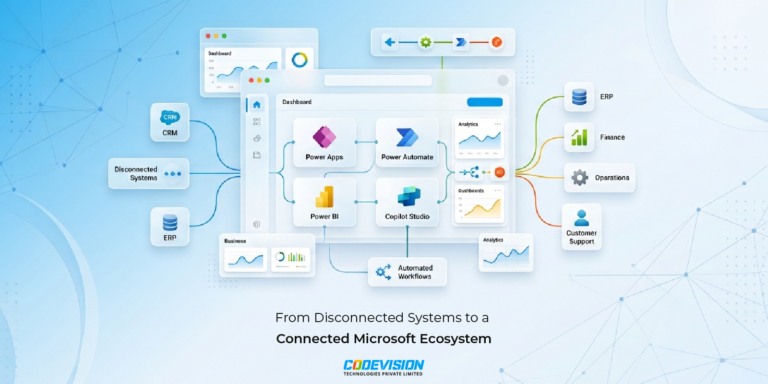
9 min readHow Microsoft Power Platform Powers Frontier Transformation for Modern Enterprises
Move beyond automation with Microsoft Power Platform. Connect data, processes, and applications to streamline operations and accelerate business growth.