


Consolidating Two Support Systems into One Microsoft 365 Helpdesk for a Cross-Border Payments Company
A tuition payments platform in the Greater Toronto Area moved its entire support operation onto CV Helpdesk inside its own Microsoft 365 tenant. The new setup took on more than 5,000 live tickets and 40+ business rules without a single line of custom code.
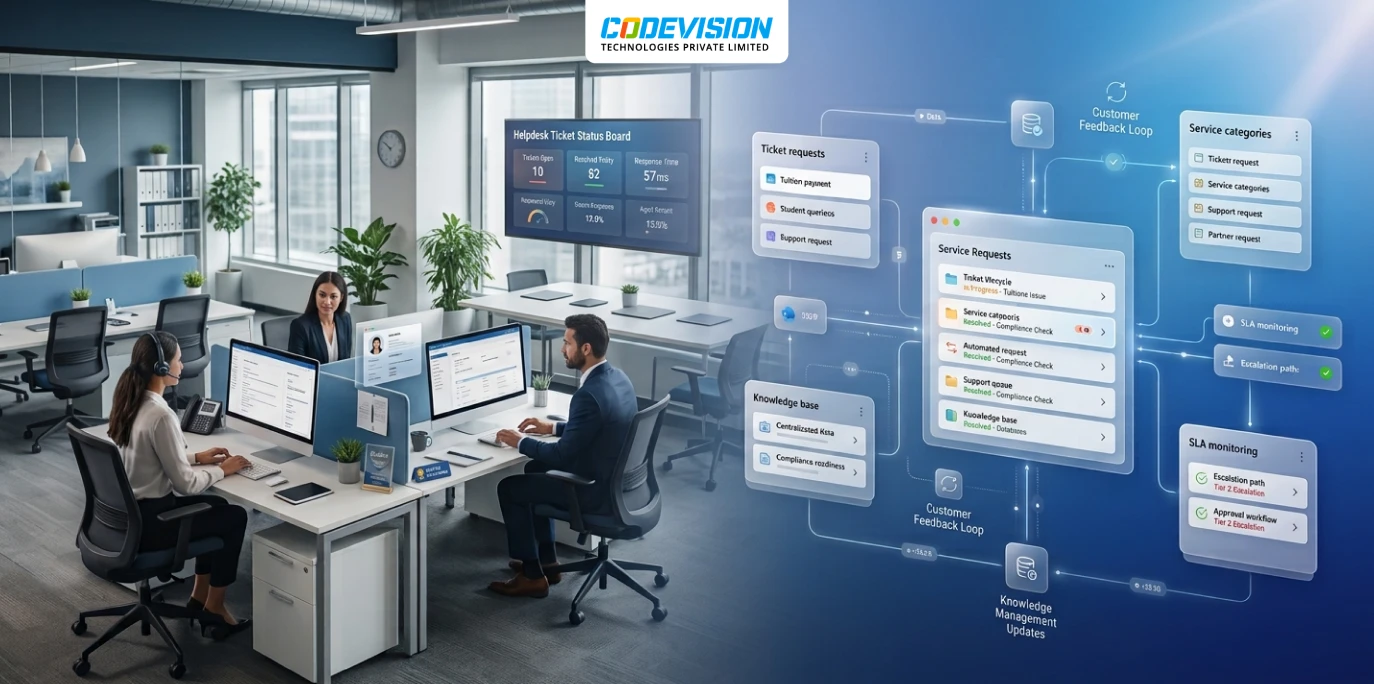
Tickets Processed
Handled in live production, not a pilot.
Business Rules
Configured with zero custom code
Support Data In-Tenant
Inside the client's own Microsoft 365 compliance boundary
SLA Compliance
Even during tuition deadlines and refund cycles
Challenges
The company already ran its email, identity, and documents on Microsoft 365, but its support desk lived somewhere else entirely. Tickets were split between Help Scout and a self-hosted open-source help desk, and each tool brought its own problems for a regulated payments business that answers to students, parents, and partner institutions every day.
-
Two disconnected ticketing tools Agents worked across both systems, so one customer’s history could sit in two places and the same work often got done twice.
-
Per-agent pricing that punished growth Help Scout’s bill went up with every agent added, which made staffing up for tuition season expensive.
-
Business rules locked in custom code Payment-specific routing and escalation on the open-source tool only worked because of custom code bolted on top of it.
-
A Tech stack nobody in-house knew The IT team’s skills were in Microsoft 365 and SharePoint, not in the stack the open-source tool was built on.
-
Dependence on outside developers Even a small change to a routing or escalation rule meant bringing in external developers to make it.
-
Customer data outside the compliance boundary Support records sat outside the Microsoft 365 tenant that governed email, identity, and documents, which is a real concern in financial services.
-
Seasonal ticket surges Tuition deadlines and refund cycles sent volume spiking, and both systems felt the strain.
-
Hard-to-forecast support budgets With licensing tied to headcount, planning the cost of peak-season support was mostly guesswork.

Solution
Rather than add yet another external platform, CodeVision replaced both tools with CV Helpdesk, a ticketing system that runs on SharePoint Online inside the client’s own Microsoft 365 tenant. The support team kept the sign-in, permissions, and infrastructure they already used every day. SharePoint lists store the ticket data, Power Automate sends notifications and drives escalations, and SharePoint’s permission model decides who can see what. More than 40 business rules covering payment status questions, refund escalations, and partner institution requests were set up through configuration instead of code. The helpdesk then went straight into production against real ticket volume, with no separate database, Dataverse environment, or outside data store involved.
Results Achieved
Running CV Helpdesk against live production volume gave the company a clear answer on whether a SharePoint-based helpdesk could carry its support operation. It could, and the results were convincing enough that the company rolled the same setup out to more of the business.
-
5,000+ tickets handled in live production, not a trial run
-
40+ business rules running through configuration, with no custom development
-
One support system instead of two, with a single, consistent ticket history
-
Support data kept in-tenant under the same Microsoft 365 governance as email and identity
-
Flat, predictable licensing with no cost jump when agents are added for peak season
-
Three more business units now running on the same helpdesk approach
We were juggling two help desks and paying outside developers just to change a routing rule. Now everything runs inside Microsoft 365, and our own team manages it.
Key features

Department-Based Ticket Routing
No-Code Business Rules Engine
SLA and Escalation Tracking
Ticket Creation from a Shared Inbox
Role-Based Access Control
Automated Notifications with Power Automate
Live Reporting with Excel Export
Custom Forms, Categories, and Branding
Flat, Tenant-Wide Licensing
Related Case Studies

Transforming Pharma Inventory and Financial Management via Dynamics 365 Business Central–QuickBooks Integration
Discover the real-world impact of integrating Dynamics 365 Business Central with QuickBooks — better batch tracking, automated processes, accurate reporting, and scalable pharma operations.

Streamlining Operations with SharePoint-Powered Intranet & Project Management System
A case study on how SharePoint streamlined intranet, timesheets, budgeting, and project management into one platform — cutting manual work and driving efficiency

Streamlining Training Management: A Scalable .NET & SharePoint Solution for the Modern Workforce
Discover how a scalable .NET and SharePoint-based solution transformed training management for a growing organization. The custom platform streamlined document management, integrated data from Oracle, and improved accessibility for both desktop and mobile users.
Frequently Asked Questions
Choosing the right digital transformation partner depends on more than technical skills. Businesses should evaluate industry experience, long-term support capability, and the partner’s ability to align technology with business outcomes.
CodeVision works closely with leadership teams to understand operational challenges, growth goals, and compliance requirements before recommending any solution—ensuring technology decisions support measurable business impact.
CodeVision supports organizations ranging from mid-sized enterprises to large global companies across industries such as healthcare, finance, logistics, real estate, and professional services.
Clients typically engage CodeVision when they need:
- Scalable digital platforms
- Secure enterprise solutions
- Long-term technology partnerships rather than short-term development
Yes. Beyond development, CodeVision acts as a strategic technology partner, helping organizations plan roadmaps, modernize legacy systems, and continuously optimize digital platforms as business needs evolve.
This approach is especially valuable for CTOs and IT leaders managing complex, multi-year initiatives.
CodeVision specializes in enterprise-grade technologies including Microsoft ecosystems, cloud platforms, automation frameworks, and custom application development.
Rather than promoting tools in isolation, CodeVision focuses on selecting technologies that integrate smoothly with existing systems and scale securely over time.
Security is built into every stage of delivery—from architecture design to deployment and ongoing maintenance.
CodeVision follows industry best practices for:
- Data protection and access control
- Secure cloud architecture
- Compliance-ready development for regulated industries
This approach helps organizations reduce risk while maintaining performance and scalability.
CodeVision offers end-to-end digital services including consulting, custom development, cloud solutions, automation, and ongoing support.
Rather than offering one-size-fits-all packages, services are tailored to business goals, timelines, and technical complexity.
Project onboarding timelines depend on scope and complexity, but we follow a structured discovery and planning process to ensure clarity before development begins.
This reduces rework, improves delivery speed, and aligns expectations early.
Yes. CodeVision signs NDAs and follows strict confidentiality protocols to protect intellectual property, business data, and strategic information.
Client trust and data privacy are treated as non-negotiable fundamentals.
Transparency is maintained through clear documentation, regular updates, and open communication channels.
Clients have visibility into progress, risks, and decisions throughout the engagement—helping leadership stay informed and confiden
CodeVision designs solutions with scalability, automation, and AI readiness in mind—ensuring platforms can evolve as technologies and market expectations change.
This forward-looking approach helps businesses stay competitive without frequent rebuilds.
Businesses choose CodeVision for its balance of technical expertise, strategic thinking, and reliability.
Clients value:
- Consistent delivery quality
- Business-aligned technology decisions
- A partnership mindset rather than transactional engagement