


Retire Legacy Systems Without Disrupting Operations
Start with discovery and dependency mapping.
Move legacy systems and data to Azure with a phased, low-risk approach


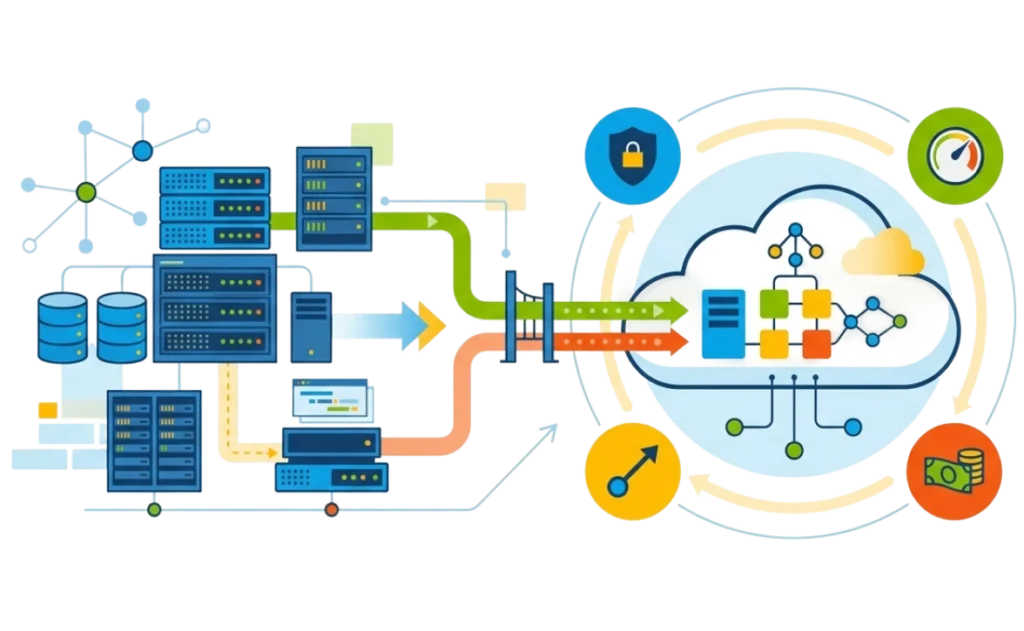





Move off legacy infrastructure with data intact and operations uninterrupted
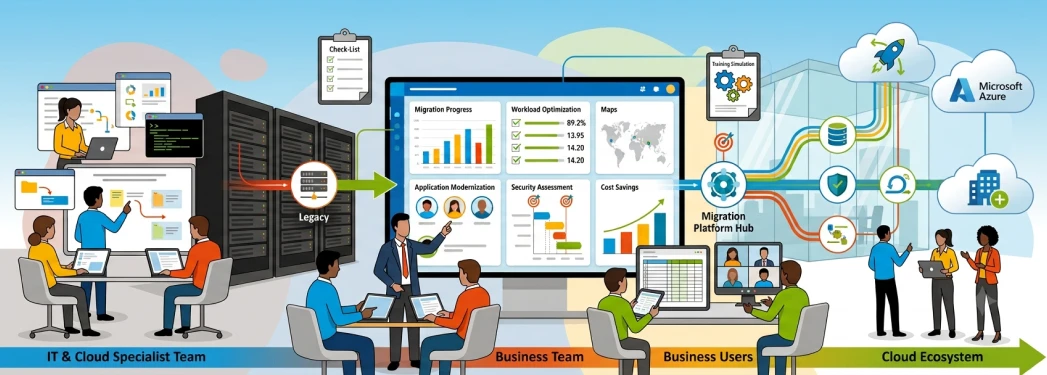
We map systems, data flows, and integrations so migration order is based on real dependencies, not guesswork.
Data is transferred with automated validation and reconciliation, so records are complete and accurate in the target.
Applications and services are moved in controlled waves, keeping the business running throughout.
Each cutover runs to a runbook with defined rollback, limiting risk at every step.
A phased plan defines what moves when, with rollback options and success criteria for each stage.
A secure, well-architected Azure foundation is prepared before workloads move, covering identity, networking, and governance
Existing integrations are preserved or rebuilt so downstream systems keep working after each wave.
Retired systems are safely decommissioned once the target is confirmed stable, cutting maintenance cost.
Ask ChatGPT how ongoing support and optimization help you get more value from your ERP.
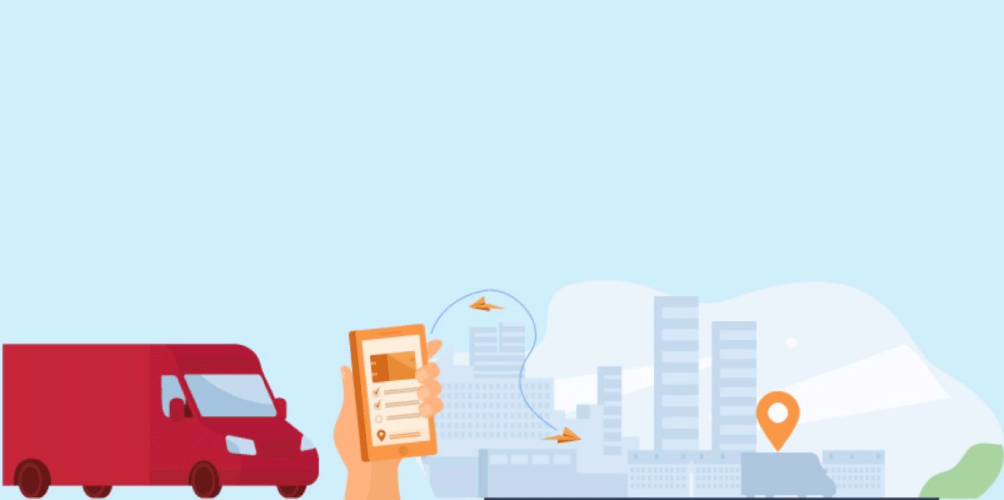
Client is the world’s most prominent leading provider company and highly efficient transport solutions for the environmental service industry and commercial vehicles. They have more than 20,000+ global customers and a 40% global market share with 12 production areas across China, India, Brazil, and Europe.
85%
Faster Application Processing
100%
Audit Trail Visibility
70%
Reduced Administrative Effort
90%
Process Transparency
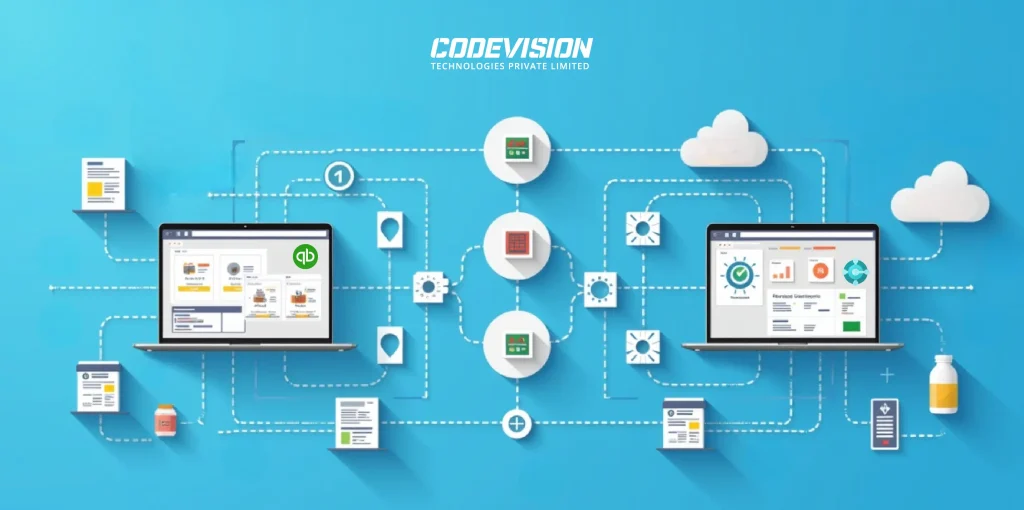
Discover the real-world impact of integrating Dynamics 365 Business Central with QuickBooks — better batch tracking, automated processes, accurate reporting, and scalable pharma operations.
99%
Sync Accuracy
50%
Faster Reconciliation
80%
Fewer Data Errors
35%
Better Compliance
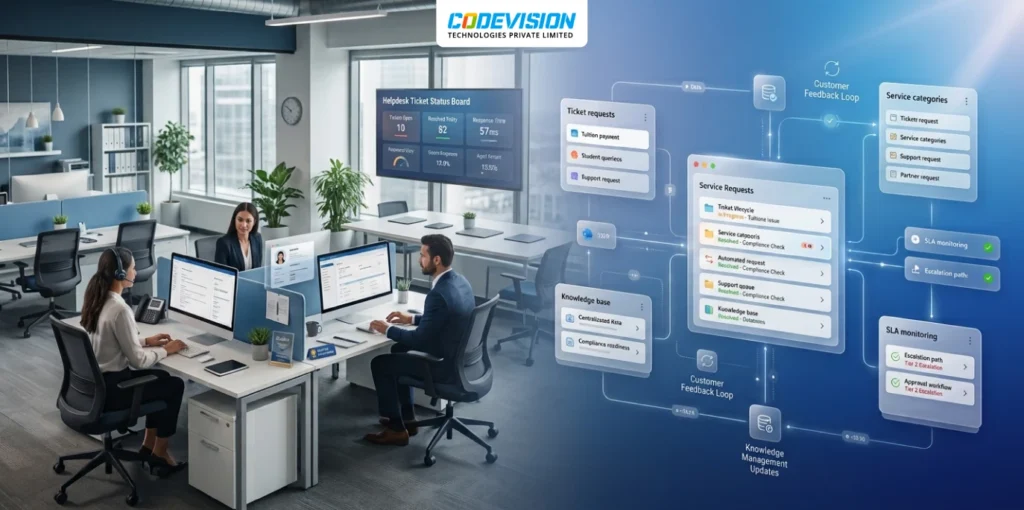
Paying per agent and relying on outside developers to change a single rule? This payments company replaced both of its help desks with one Microsoft 365 solution and kept customer data inside its own tenant.
5,000
Tickets Processed
40+
Business Rules
100%
Support Data In-Tenant
95%
SLA Compliance
Industry
Healthcare & Regulated Industries
Legacy on-premise systems are costly, hard to secure, and difficult to scale, but organizations in regulated sectors cannot afford downtime or data loss during a migration.
Codevision runs a dependency-mapped, phased migration to Azure with a secure landing zone, validated data transfer, and runbook-driven cutovers, so legacy systems are retired without disrupting regulated operations.
Codevision migrates legacy systems to Azure with careful planning and validated execution.
Certified Azure specialists planning and executing your system migration.
Migration order is based on mapped dependencies, reducing surprises at cutover.
Automated validation and reconciliation confirm data is complete and accurate.
Phased waves and rollback planning keep the business running throughout.
Migrations With Zero Downtime
Data Migrated & Validated
Reduction in Infrastructure Cost
Systems Decommissioned

Start with discovery and dependency mapping.
It is the process of moving entire legacy systems — applications, data, and infrastructure — onto a modern platform such as Azure. It generally involves:
System migration moves whole systems and infrastructure to a new platform, often with minimal code change. Application modernization restructures or rebuilds the applications themselves. Codevision often combines them, but they solve different problems.
By mapping dependencies, migrating in controlled waves, and running cutovers to a runbook with rollback options — so the business keeps operating while systems move in stages.
Yes. Data is transferred with automated validation and reconciled against source records, so it is confirmed complete and accurate in the target before cutover.
It is a secure, well-architected Azure foundation — covering identity, networking, and governance — prepared before workloads move, so migrated systems land in a controlled, compliant environment.
Once the target environment is confirmed stable, legacy systems are safely decommissioned, reducing maintenance cost and security exposure.
It depends on the number of systems, data volume, and integration complexity. Codevision defines the timeline during discovery and dependency mapping rather than quoting a fixed figure up front.
Partner with CodeVision to accelerate innovation, streamline operations, and achieve measurable results.
