


Transforming Pharma Inventory and Financial Management via Dynamics 365 Business Central–QuickBooks Integration
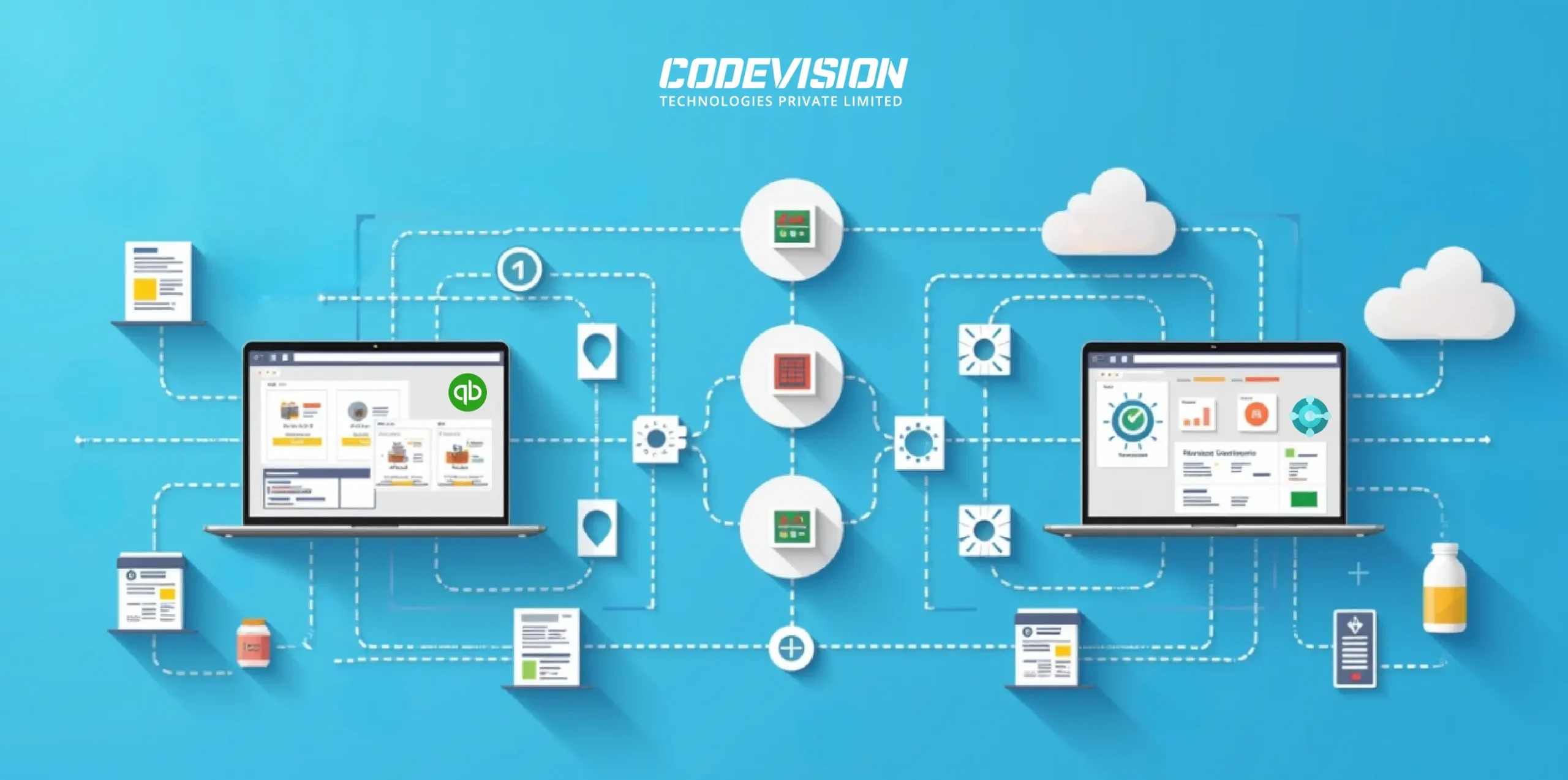
A leading UK pharmaceutical distributor unified inventory, expiry tracking, and financial data by integrating QuickBooks with Dynamics 365 Business Central via Power Automate — replacing manual reconciliation with real-time, compliant automation.
Sync Accuracy
Across inventory and financial data
Faster Reconciliation
Accelerating month-end close
Fewer Data Errors
Eliminating manual duplication
Better Compliance
Centralized risk and contract monitoring.
Challenges
Despite using QuickBooks for accounting, the pharmaceutical company faced significant operational, compliance, and scalability challenges. The absence of integration with Microsoft Dynamics 365 Business Central further limited visibility, control, and automation across core business functions
-
Limited product management and customization:
Inability to manage pharma-specific attributes such as formulation type, batch number, manufacturing date, and expiry date. -
No batch, lot, or expiry lifecycle tracking:
Lack of batch-level and expiry management increased regulatory and patient safety risks. -
Manual and inefficient invoice processing:
High-volume invoice and order handling required manual intervention, slowing reconciliation and approvals. -
No end-to-end audit trail:
Missing detailed transaction logs and audit histories required for GMP, MHRA, and FDA compliance. -
Restricted financial and ledger reporting:
Standard reports lacked advanced ledger customization and compliance-ready financial insights. -
Disconnected operational workflows:
Procurement, inventory, manufacturing, and sales operated in silos with no unified system view. -
Duplicate data entry and error risk:
Repetitive manual data entry across systems increased errors, mismatches, and reconciliation delays. -
Limited scalability and automation:
Inability to automate batch-level costing, R&D expense allocation, or multi-department workflows. -
Weak multi-entity and multi-currency support:
Challenges in consolidating financials across entities, suppliers, and international currencies. -
No real-time operational insights:
Lack of integration prevented real-time visibility into inventory valuation, cash flow, and production costs. -
Inadequate regulatory documentation controls:
No support for document versioning, approval workflows, or compliance audit logs. -
Complex and delayed month-end closing:
Manual reconciliations and spreadsheet dependencies slowed financial close cycles..

Solution
To overcome operational fragmentation and compliance risks, Codevision implemented a unified integration between Microsoft Dynamics 365 Business Central and QuickBooks using Microsoft Power Automate, creating a real-time, automated data flow that aligned financials with operational processes. This integration standardized inventory and expiry tracking, automated invoice and ledger synchronization, and consolidated audit and reporting workflows across departments. By unifying transactional and master data across systems, the solution enabled consistent, compliant control of product lifecycles, financials, and regulatory documentation while reducing manual data entry and accelerating decision cycles.
Results Achieved
Following the integration of QuickBooks with Microsoft Dynamics 365 Business Central, the client achieved significant improvements in operational efficiency, financial accuracy, and regulatory compliance by unifying financial and operational data into a single, automated system that enabled real-time visibility and faster decision-making.
-
99% synchronization accuracy
across inventory and financial data -
50%+ reduction in reconciliation time,
accelerating month-end close -
80–90% reduction in data entry errors
by eliminating manual duplication -
End-to-end batch and expiry tracking
aligned with GMP and MHRA standards -
Instant audit readiness
with complete transaction and document histories -
Real-time dashboards
for inventory valuation, expiry status, and cost insights.
The Power Platform migration paid for itself in the first quarter. Response times dropped and our compliance reporting is finally automated.
Key features

Seamless QuickBooks–Business Central Sync
Custom Product Catalog Management
Automated Inventory Sync and Adjustments
Expiry Tracking and Alerts
Ledger and Financial Reconciliation Automation
Advanced Audit Trail and Compliance Control
Document Management and Version Control
Multi-Entity and Multi-Currency Support
Real-Time Insights and Reporting
Related Case Studies


How a US Manufacturer Replaced a Legacy PHP Request System with One SharePoint Request Portal
One SharePoint portal replaced a legacy PHP request system for a US manufacturer, with seven request types, automated approvals and a reported 60% faster processing.


Consolidating Two Support Systems into One Microsoft 365 Helpdesk for a Cross-Border Payments Company
Paying per agent and relying on outside developers to change a single rule? This payments company replaced both of its help desks with one Microsoft 365 solution and kept customer data inside its own tenant.


Simplifying Document Tracking and Resident Management with Microsoft Power Automate
Discover how a UK care group transformed compliance and resident management with Microsoft Power Automate — cutting manual work and boosting accuracy.
